The Next Opinion: Why HEIT Is the Missing Link Between Pain Relief and True Recovery
For years, pain care has lived in extremes.
On one end: passive treatments that feel good for 20 minutes and do nothing lasting.
On the other: invasive procedures that promise everything and deliver complications, downtime, and regret.
Most patients are stuck in the middle—cycling through medications, injections, and temporary fixes—never quite getting worse enough for surgery, but never getting better enough to live normally.
That’s where High-Energy Inductive Therapy (HEIT) enters the conversation.
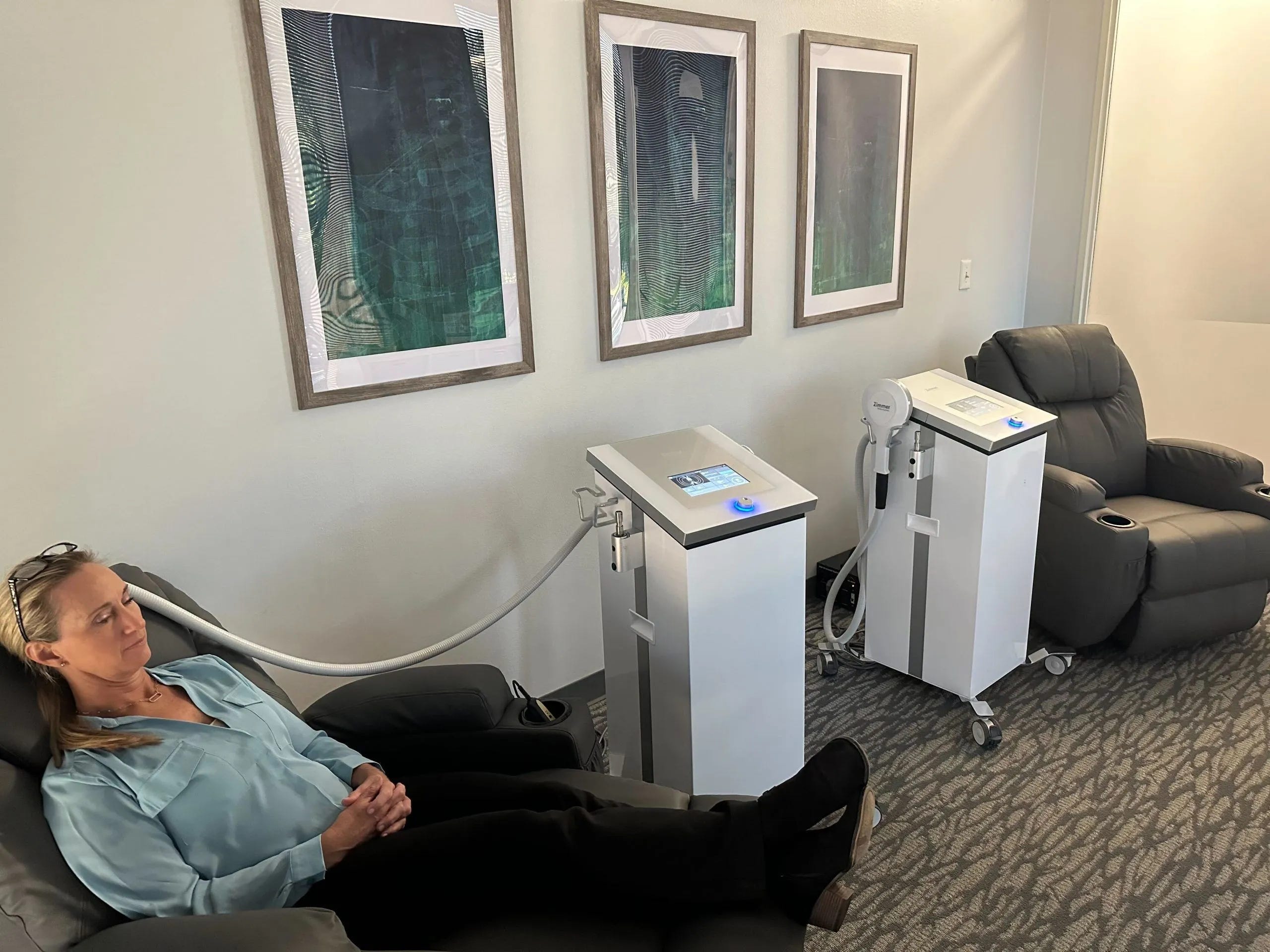
And more specifically, why we added the Zimmer EmField Pro to our clinic.
This isn’t a trend.
It’s a correction.
What Is HEIT (And Why You’ve Probably Never Heard of It)?
HEIT stands for High-Energy Inductive Therapy—a non-invasive technology that uses powerful electromagnetic fields to stimulate nerves, muscles, joints, and deep connective tissue without touching the skin.
Unlike surface-level modalities, HEIT works by inducing electrical currents inside the body, triggering biological responses at depths traditional therapies simply can’t reach.
No needles.
No drugs.
No incisions.
Just physics—applied properly.
What makes HEIT different?
Penetrates deep tissue without pain
Activates neuromuscular pathways directly
Works through clothing
Requires no patient effort
Produces measurable motor and neurological responses
In other words: it doesn’t ask the body politely to heal—it turns the switch back on.
Why Traditional Pain Treatments Keep Falling Short
Before we talk about why HEIT works, we need to be honest about why so many treatments don’t.
Medications
They reduce perception, not pathology.
Pain quiets down. Dysfunction stays.
Injections
Short-term inflammation control with long-term tissue consequences.
Helpful for flares—not a strategy.
Passive modalities
Heat, ultrasound, basic electrical stimulation—they feel good, but they don’t create lasting neurological change.
Surgery
Necessary in specific cases.
Overused in many others.
Often irreversible.
The common flaw?
None of these reliably retrain the nervous system.
Pain is not just a tissue problem.
It’s a communication problem.
HEIT addresses that directly.
How the Zimmer EmField Pro Actually Works
4
The Zimmer EmField Pro generates high-intensity electromagnetic pulses that pass effortlessly through skin, fat, and muscle.
These pulses induce electrical currents in targeted tissues, leading to:
Neuromuscular activation
Muscle re-education
Improved joint stability
Pain modulation at the spinal and peripheral nerve level
Enhanced local circulation
Unlike low-energy electrical stimulation, this isn’t surface noise.
Patients often feel muscles contract, joints stabilize, and movement patterns change—sometimes within minutes.
That’s not placebo.
That’s physiology responding to a meaningful stimulus.
What HEIT Is Best Used For (And Where It Shines)
HEIT isn’t a “do-everything” machine.
It’s a precision tool—and when used correctly, it fills gaps nothing else does.
Conditions we use HEIT for most effectively:
Chronic low back pain
Neck pain and cervical instability
Shoulder impingement and rotator cuff dysfunction
Knee osteoarthritis and post-injury weakness
Hip pain and pelvic imbalance
Nerve-related pain patterns
Muscle inhibition after injury or surgery
Especially valuable when:
Progress has stalled
Pain is disproportionate to imaging
Muscles won’t “turn back on”
Traditional therapy hit a plateau
This is where most patients actually live.
HEIT vs Laser, PEMF, and Decompression
Let’s clear something up.
HEIT does not replace other advanced therapies—it complements them.
Laser therapy
Excellent for inflammation reduction and tissue healing.
PEMF
Great for cellular signaling and recovery support.
Spinal decompression
Ideal for disc and nerve unloading.
HEIT
The missing neurological and neuromuscular piece.
Think of it like this:
Laser heals tissue.
Decompression unloads structure.
HEIT restores control.
When used together, results compound instead of plateau.
What Patients Notice First
Patients don’t talk about waveforms or field strength.
They say things like:
“My leg feels stronger.”
“That movement doesn’t catch anymore.”
“I feel more stable standing up.”
“It’s not just less pain—I move better.”
That distinction matters.
Pain relief without improved movement is temporary.
Movement improvement changes outcomes.
Why We Chose the Zimmer EmField Pro (Specifically)
Not all HEIT systems are created equal.
Zimmer has decades of experience in orthopedic and rehabilitation technology, and the EmField Pro reflects that.
What stood out:
Consistent, high-energy output
Precise applicator control
Clinical flexibility across body regions
Built for real patient volume—not demos
Reliable, repeatable results
This wasn’t about having the “newest toy.”
It was about having the right tool.
Who HEIT Is Not For
Let’s be direct.
HEIT isn’t for people who:
Want a miracle in one visit
Refuse to move or participate in care
Expect passive treatment to fix years of neglect
Aren’t interested in functional improvement
It works best for patients who want real recovery, not just temporary quieting of symptoms.
The Bigger Picture: Why HEIT Represents a Shift in Pain Care
Pain care is finally moving away from:
Symptom chasing
Over-medicalization
One-size-fits-all protocols
And toward:
Neurological restoration
Functional improvement
Non-invasive, evidence-guided care
Technologies that work with the body
HEIT fits that future perfectly.
Not because it’s flashy—but because it’s effective where others fail.
Final Thought
The question isn’t whether HEIT works.
The question is why it took so long for it to be used properly.
If you’ve tried everything and stalled…
If imaging doesn’t explain your symptoms…
If you’re tired of being told to “wait and see”…
This may be the missing piece.
And that’s exactly why it belongs in The Next Opinion.
Medical Disclaimer: This article is for educational purposes only and is not intended to diagnose, treat, or replace medical advice. Individual results may vary. Always consult a qualified healthcare professional regarding your condition and treatment options.


